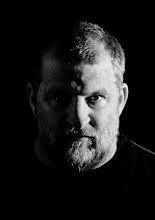
You form a strange emotional connection to the subjects in each image as you study them, being horrified and caring for them at the same time.
The first image you encounter upon entering the exhibit is “Mr. Milton Frisbie”. He is standing sentry for the show, only subtly hinting at what you about to see. “Mr. Milton Frisbie” is a clown. Not a funny clown, but a tobacco stained, sad, pathetic, and more than just a little frightening clown. This is the clown that people have nightmares about. This is the clown that sneaks out of your closet while you are sleeping and snatches you up, the smell of urine and cigarette smoke embedded in his costume. This is the clown that encourages some people to be afraid of clowns.
This is just the beginning of the emotional avalanche you are about to attempt to outrun. Twenty images hung in four rooms and a hallway of the Jill Coldren-Wilson Gallery of the Kimball-Jenkins Estate in Concord, New Hampshire. All of the images having room to breathe their own fetid breath and engage you with their own empty eyes.
“The Final Sleep of Grandma Ev” is sad and touching in the most soulful places. Humanity and love are personified in the delicate and careful caress of her forehead, with true love peering out from behind the coke bottle glasses of the husband. Nothing specifically tells you that this couple is a husband and wife, but the feeling of overwhelming sadness that you get from this image is that of two people who have shared 40 years together. This appears to be the most personal of the images in this exhibit, appearing to be the only image that may not be meticulously staged.
“The Bleed” is a woman’s nude torso, bleeding from the face, and is disturbing to the core. How does a bloody nose look so severe? Is it her pointy animalistic teeth? Is it the oil black blood running into her mouth and dripping off her chin onto her chest where it is carefully cradled by her hand, not wanting to spill a drop onto the grimy floor that you imagine beneath her?
In “Blind Girl” irony drips from the photograph as the aforementioned blind girl sports a “Blue Ridge Parkway” tee shirt promoting a scenic vista that she will never witness. Shadowed by a mysterious out of focus figure, monitoring her from off her shoulder, is this a protector ensuring that no harm comes to the girl, or is it a malevolent spirit hovering in the background waiting for an opportunity to possess the sightless child?

In “Jabberwocky”, a howl of emotional agony overtakes the subjects face as he is jammed into the left hand side of the frame, contorted and cramped, with his too big Puritan hat amputated by the top of the frame, mirroring his actually amputated foot in the bottom of the frame, and the creases in his hand on his crutch reflecting the creases in his partially buttoned filthy jeans. He mocks the empty path of the right side of the frame that the one legged man will never run through.
Nothing is happenstance in these informationally loaded photographs. All of the images are meticulously staged; everything in the frame is there for a reason. The abuse, scratches, and stains are purposefully placed, creating the illusion of peering through a filth covered window into a nightmare filled world. The subjects stare back at you, aware of your voyeurism and daring you to engage them. At first glance, you recoil, but after the initial shock wears off, you start to look more closely, like you would stare at a traffic accident. After being held hostage by the gaze of these graphic images, you begin to feel a strange attachment to them, kind of like a photographic “Stockholm Syndrome”. These relentless portraits leave a stain on your soul that will be hard to remove. Some stains are good, like the grape Kool-Aid that dripped down your chin on the hot August afternoon when you were nine, and some stains are bad, like the blood embedded in the rough concrete floor after an industrial accident. If this exhibit leaves a good stain or a bad stain, is up to you to decide.
This exhibit runs from June 1st through July 31st in the Jill Coldren-Wilson gallery at the Kimball-Jenkins Estate at 266 North Main Street in Concord, New Hampshire. The gallery is open from Monday through Friday, 9:00 – 4:30. For more information, call (603) 225-3932 or visit
www.kimballjenkins.com.

 - Ted Orland and David Bayles
 Great things can certainly come in small packages, and weighing in at a minuscule 122 pages, 8" x 5.5", and less
  than half an inch think, this book is worth it's weight in gold.
 - John Szarkowski
 rarely seen portraits of Adams and contemporaries, it moves to the photographic section of the book. First up of the 114 reproductions included are some of Adams early images from 1920, and then moving chronologically through his life. It is amazing to witness his growth as a technician and as an artist, The reproductions are immaculate and strikingly beautiful. My favorite section of the book is where on opposing leaves, it compares two Adams prints made from the same negative at different periods in Adams life. In all of the cases provided, the images are very different, but both beautiful, proving that as Ansel was fond of saying "The negative is the score, and the print is the performance."
 - DVD
- DVD

 , while she absorbs the success of that work, and struggles to put together her next body of work, all the while working her horse farm, being a mother to three children, and a wife to an ailing husband.