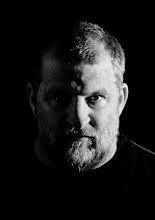
Here's the Deal....
I see a lot of photographers pages with a FAQ (frequently asked questions) section, and most of them are complete fabrications. Not the answers, just the questions. People ask themselves the questions that they want to answer so they can get whatever information across that they would like to get out, and it's easier if they pretend that someone else is asking them. Now don't inundate me with "My FAQ section is absolutely true." If it is, that's terrific. The people that make them up know who they are. Even the ones that are made up aren't a big deal. No one's getting hurt and information is being passed along, which is more than I can say for a lot of photographers that act like they are dealing with state secrets or the formula for nuclear fission and no one else is worthy of knowing what they know.
"What's your point here Scott?" you may be thinking.
My point is, that there is only one question that I get asked frequently, at least once a day, and that is "What kind of camera do you use?", and that is probably the least important piece of information about a photographer that there is.
Not that it matters, but I bought my first 35mm camera in 1978, it was a Ricoh, and I bought it at Lechemere Sales at the Mall of New Hampshire. A few years later I bought a Minolta X-700 and a few years later I bought a second X-700. A few years after that, I injured my arm badly in an accident and need to change the way I worked so I bought a Nikon N90. I shot with that camera for over 10 years until I decided to go digital and bought a Nikon D50 a bout six years ago to dip my toes in the digital pool, and three years ago upgraded to a Nikon D200. There, now you know what kind of camera I have always used......and it doesn't make a bit of difference. No camera EVER took a great photograph any more than a typewriter wrote a great novel. A camera is just a tool, like a hammer or a drill. It's the person using it that matters.
Now this information might be quite depressing for those of you that thought you could go out and spend a couple thousand dollars on camera equipment and be a great photographer. It just doesn't work that way. Photography is an art, and art is a creative process, and you can't buy creativity. You can learn it, but you can't buy it. I've been to photography exhibits where all of the images were taken with SX-70's, 110 instamatics, and other varieties of toy cameras that cost about $20.
My friend Will Michael and I were discussing an image the other day (as we are often prone to do) when he said "Seeing takes discipline, it's more than just looking." I'm always talking about needing "vision" and Will's statement just cuts right to the heart of it. You have to actually see what is in the frame. All of it, not just the center. You have to look in the corners and n the background. You have to check your horizons and your plumbs to make sure that they are horizontal and plumb.
Ansel Adams is one of the all time photographic greats and a personal icon of mine. He also has one of the most misinterpreted quotes around.
"There are no rules for good photograph's, only good photographs."
People like to interpret this as meaning that Ansel Adams is telling them that they don't need to know anything about the photographic rules, that they can just go out and shoot 300 frames per minute haphazardly and get good photographs. Sure, you might get a good frame here and there, but a blind squirrel will find a nut every once in a while as well. What he meant was that just because you follow the rules does not guarantee a great image. There are lots of rules, and Ansel wrote plenty of them. Of course it's ok to break the rules, but you have to know that you are breaking them and be breaking them for a purpose. A horizon line that is 2 or 3 degrees off just looks crooked. A horizon line that is 20 or 30 degrees off can impart a feeling or an emotion and look like it is done intentionally and not just that you are holding your camera crooked.
If you want to take great images, you don't need a fancy camera. You need heart, passion, and vision. Everything else is just practice.
"What's your point here Scott?" you may be thinking.
My point is, that there is only one question that I get asked frequently, at least once a day, and that is "What kind of camera do you use?", and that is probably the least important piece of information about a photographer that there is.
Not that it matters, but I bought my first 35mm camera in 1978, it was a Ricoh, and I bought it at Lechemere Sales at the Mall of New Hampshire. A few years later I bought a Minolta X-700 and a few years later I bought a second X-700. A few years after that, I injured my arm badly in an accident and need to change the way I worked so I bought a Nikon N90. I shot with that camera for over 10 years until I decided to go digital and bought a Nikon D50 a bout six years ago to dip my toes in the digital pool, and three years ago upgraded to a Nikon D200. There, now you know what kind of camera I have always used......and it doesn't make a bit of difference. No camera EVER took a great photograph any more than a typewriter wrote a great novel. A camera is just a tool, like a hammer or a drill. It's the person using it that matters.
Now this information might be quite depressing for those of you that thought you could go out and spend a couple thousand dollars on camera equipment and be a great photographer. It just doesn't work that way. Photography is an art, and art is a creative process, and you can't buy creativity. You can learn it, but you can't buy it. I've been to photography exhibits where all of the images were taken with SX-70's, 110 instamatics, and other varieties of toy cameras that cost about $20.
My friend Will Michael and I were discussing an image the other day (as we are often prone to do) when he said "Seeing takes discipline, it's more than just looking." I'm always talking about needing "vision" and Will's statement just cuts right to the heart of it. You have to actually see what is in the frame. All of it, not just the center. You have to look in the corners and n the background. You have to check your horizons and your plumbs to make sure that they are horizontal and plumb.
Ansel Adams is one of the all time photographic greats and a personal icon of mine. He also has one of the most misinterpreted quotes around.
"There are no rules for good photograph's, only good photographs."
People like to interpret this as meaning that Ansel Adams is telling them that they don't need to know anything about the photographic rules, that they can just go out and shoot 300 frames per minute haphazardly and get good photographs. Sure, you might get a good frame here and there, but a blind squirrel will find a nut every once in a while as well. What he meant was that just because you follow the rules does not guarantee a great image. There are lots of rules, and Ansel wrote plenty of them. Of course it's ok to break the rules, but you have to know that you are breaking them and be breaking them for a purpose. A horizon line that is 2 or 3 degrees off just looks crooked. A horizon line that is 20 or 30 degrees off can impart a feeling or an emotion and look like it is done intentionally and not just that you are holding your camera crooked.
If you want to take great images, you don't need a fancy camera. You need heart, passion, and vision. Everything else is just practice.